

Your tires are the only part of your vehicle that touches the road, so you need to keep them in great shape to help ensure a safe, smooth ride. One way to do this is by scheduling regular tire rotations, which helps your tires wear evenly and last longer. But how often should you do a tire rotation? Don’t worry! We’ll break down the details and guide you through everything you need to know.
Why Is Tire Rotation Important?
Ever wonder why you need to rotate your tires? Here’s how rotating your tires can help:
Extends tire life: Tires don’t wear out evenly. Depending on whether your vehicle is front-wheel drive, rear-wheel drive, or all-wheel drive, some tires take on more of the workload. Rotating them using proper tire rotation patterns spreads the wear evenly across all four tires (and sometimes your spare, if equipped) so they last longer.
Better performance: Evenly worn tires help your car handle better. Whether you’re cruising on the freeway or taking a sharp turn around town, evenly worn tires give you better traction and control.
Save money: New tires aren’t cheap! Rotating your tires regularly means you won’t have to replace them as often, which can save you a nice chunk of change.
Stay safe: Uneven tire wear can make your car harder to handle and reduce traction—especially in rain, snow, or icy conditions. Rotating your tires helps keep you safer on the road, no matter what the weather.
How Often Should Tires Be Rotated?
Most tire manufacturers recommend that you rotate your tires between 5,000 and 8,000 miles, but you should always refer to your owner’s manual to find the specific recommendations for your vehicle. Also, keep in mind that tires wear differently depending on their position on the vehicle, your driving style, and the suspension’s condition. If your tires develop irregular or uneven tire wear patterns, you may want to rotate them even sooner.
What Happens If You Don’t Rotate Your Tires?
Rotating your tires helps:
Extend the life of your tire treads
Avoid losing tire traction
Prevent uneven tire wear
Without regular tire rotations, your tires may not last as long, meaning you may have to replace them more often (that’s a lot of money!). Plus, unevenly worn tires may make your vehicle more difficult to control, especially when you drive in inclement weather.
Signs It’s Time for a Tire Rotation
Not sure if your tires need a rotation? It’s okay; you don’t have to be a car expert to spot the signs! Here are some common clues that it’s time to schedule a tire rotation:
Uneven tire wear: If some tires look more worn down than others, it’s a clear sign they’re not wearing evenly. Check the tread depth across all four tires—if there’s a noticeable difference, it’s time for a rotation.
Vibrations while driving: Feeling a vibration through the steering wheel or your seat, especially at higher speeds, could mean your tires are unevenly worn. Rotating them can help restore a smoother ride.
Mileage milestone: Even if you don’t notice any issues, most tire manufacturers recommend rotating your tires every 5,000 to 8,000 miles (or as stated in your owner’s manual). If you’ve hit that mark, it’s time to visit a professional.
Noticeable noise: A steady hum or odd noise coming from your tires could mean uneven wear patterns are developing. Rotating them can help balance things out and reduce the noise.
What Does a Tire Rotation Entail?
You might ask yourself, “Why do I need to rotate my tires? Aren’t they rotating every time I drive them?” Okay, we’ll give you that. But in this case, rotation means moving your four tires from their current positions to other positions on the vehicle. As simple as it sounds, rotations help ensure optimal performance and tire longevity.
However, rotating tires is not like musical chairs — you can’t just match up any tire to any available spot. Consult your owner’s manual, tire dealer, or manufacturer for the correct rotation pattern for your tires. Depending on your vehicle and tires, your tires’ recommended rotation might be front to back, side to side, or in a diagonal direction.
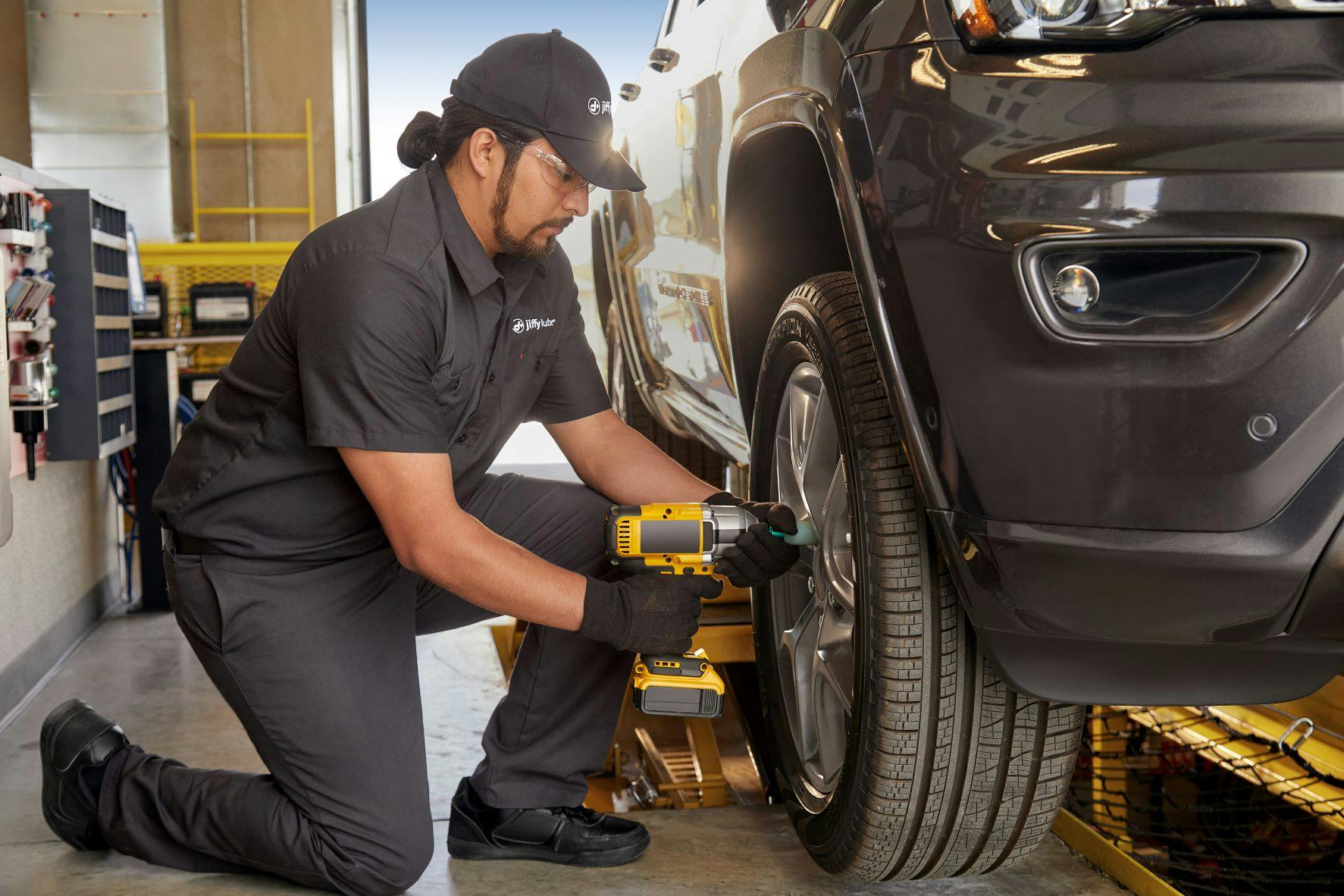
Let Jiffy Lube Handle the Specifics on Tire Rotation
As you can see, a lot goes into inspections, rotations, and knowing how often to rotate tires, and your local Jiffy Lube® will be glad to get you rolling again. Trained technicians can perform a full rotation and inspection of all your tires, including the spare. When they’re finished, a second team member will even double-check the torque on lug nuts and fasteners to help ensure your safety. Meanwhile, you can think about more important things—like where you’ll drive during your next carefree 5,000 to 8,000 miles.
NOTE: Not all services are offered at all Jiffy Lube service centers. Please call ahead or check jiffylube.com to ensure the service is available at the Jiffy Lube location near you.
Related Resources

What Is a Car Alignment?
You may have heard the term “car alignment,” but what is it exactly? A car alignment — also known as a tire or wheel alignment — is the adjustment of the wheels’ angles to ensure they’re aligned to each ...

Car Maintenance Schedule
A well-maintained vehicle helps keep you and your passengers safe and secure. And following a regular vehicle maintenance schedule is the best way to keep your vehicle on the road. Sticking to ...

Understanding Tire Wear Patterns
We get it…. purchasing new tires can be expensive. Maintaining your vehicle's tires is essential for safety, performance, and longevity. One way to keep an eye on your tire performance is by recognizing ...